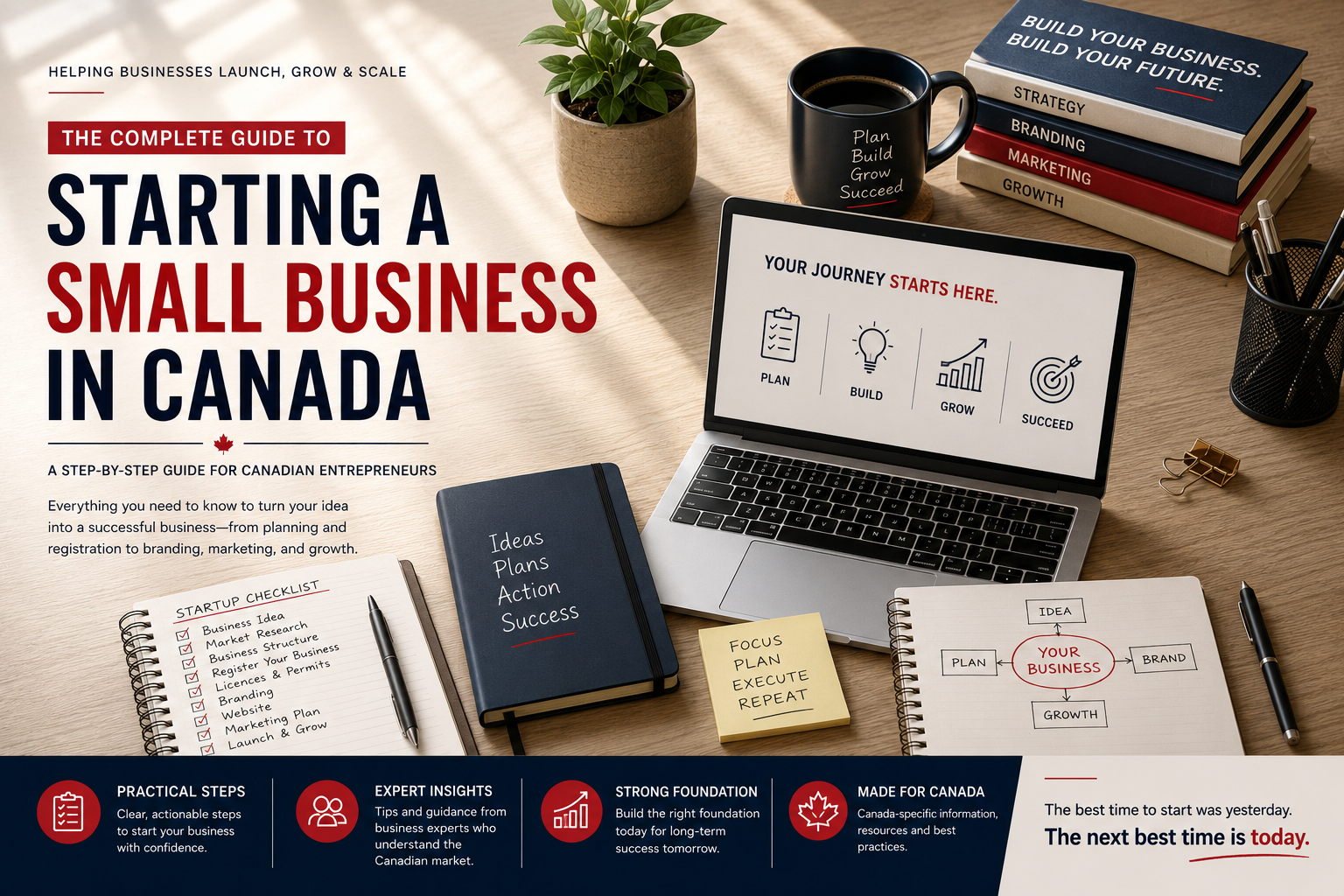
The Complete Guide to Starting a Small Business in Canada
Starting a small business in Canada doesn’t have to be complicated.
From choosing your business structure to registering your business, setting up your finances, building your brand, and finding customers, there are several important steps to consider.
This guide gives you a simple overview of the process.
Note: Requirements vary by province, territory, municipality, industry, and business structure. Always confirm the requirements that apply to your specific situation.
1. Choose Your Business Idea
Start by getting clear about what you want to sell or provide.
Consider:
- What product or service will you offer?
- Who is your target customer?
- What problem does your business solve?
- How will you make money?
A clear business idea gives you a foundation for everything that follows.
2. Choose Your Business Structure
Common business structures in Canada include:
- Sole Proprietorship — A business owned and operated by one individual.
- Partnership — A business operated by two or more owners.
- Corporation — A separate legal entity from its owners.
You don’t necessarily have to incorporate to start a business.
Your choice should take into account your business activities, liability, taxes, growth plans, and administrative requirements.
3. Choose and Register Your Business Name
You can operate under your own legal name or choose a separate business name.
If you use a business name that is different from your legal name, you may need to register it depending on where you operate.
Before choosing a name, check its availability and consider securing the matching domain name.
4. Register Your Business
Whether you need to register depends on your business structure, name, location, and circumstances.
If registration is required, make sure you register with the appropriate provincial, territorial, or federal authority.
Business registration and incorporation are not the same thing.
5. Check Your Tax Requirements
Depending on your business, you may need a Business Number (BN) and CRA program accounts such as GST/HST or payroll.
Keep accurate financial records from the beginning and understand your tax obligations.
6. Check Licences and Permits
Some businesses require licences or permits before they can operate.
Requirements can come from the:
- Federal government
- Provincial or territorial government
- Municipality
Your industry and location will determine what applies to you.
7. Set Up Your Business Finances
Keep your business finances organized.
Consider setting up:
- A business bank account
- Bookkeeping system
- Invoicing system
- Expense tracking
- Business payment methods
Good financial records make it easier to manage your business and prepare for tax obligations.
8. Build Your Brand and Online Presence
Your business should look professional and be easy to find.
Consider creating:
- Logo and visual identity
- Business cards and marketing materials
- Professional email address
- Website
- Social media profiles
Your online presence should clearly communicate who you are, what you offer, and how customers can contact you.
9. Start Marketing
Once your business is ready, start attracting customers.
Depending on your audience, you might use:
- Social media
- Google search
- Short-form video
- Blogging
- Networking
- Referrals
- Online advertising
Focus on the marketing channels that make sense for your business instead of trying to do everything at once.
Ready to Start?
Starting a business is easier when you have a clear plan.
This article provides general information and is not legal, tax, or professional advice.