
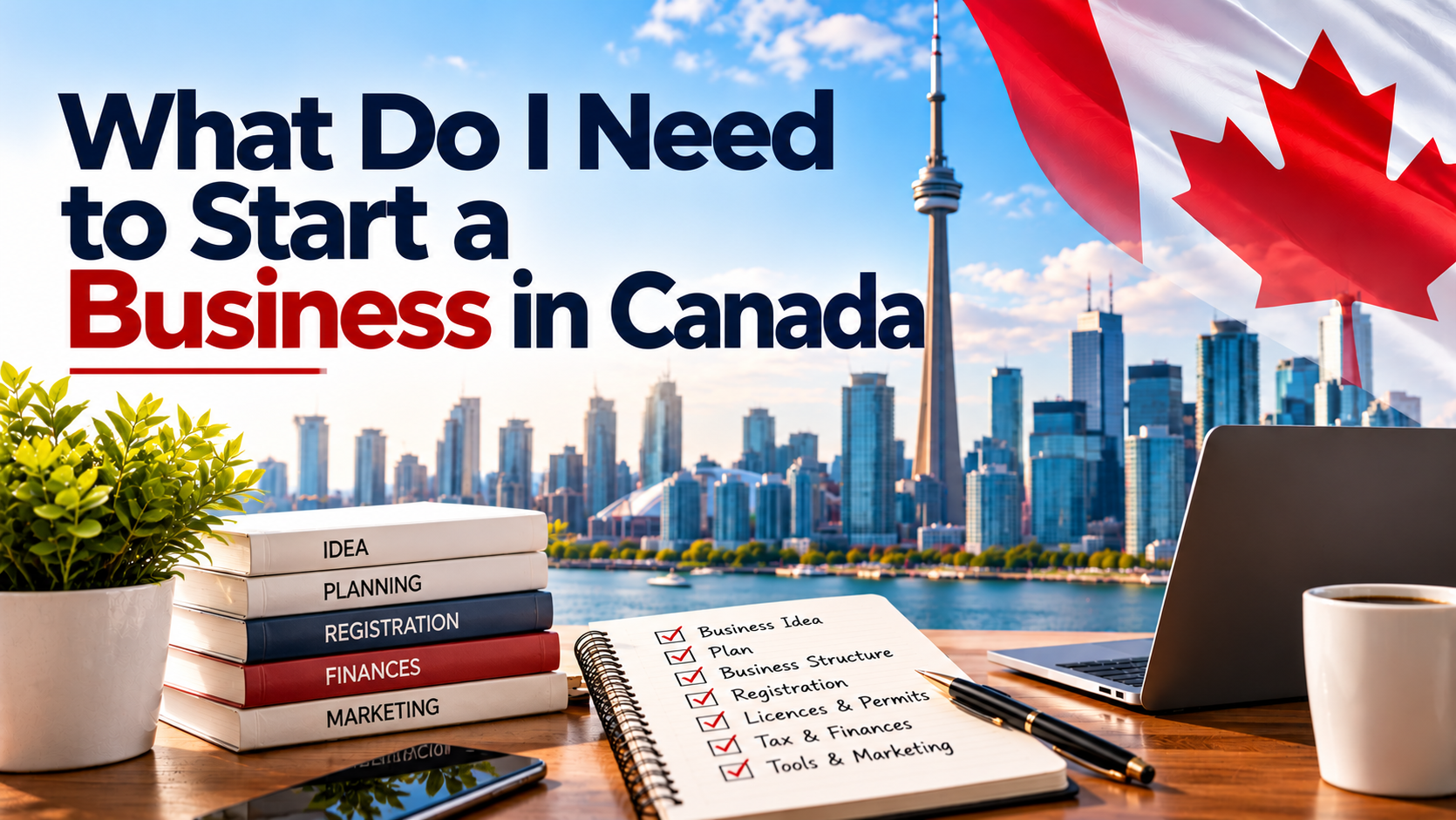
Starting a business in Canada does not have to be complicated. Whether you want to work for yourself, launch an online store, offer professional services, or open a physical location, understanding the basic requirements can help you get started with confidence.
The exact requirements depend on your business type, location, and industry, but most entrepreneurs should consider the following essentials.
1. A Business Idea and a Plan
Every business begins with an idea. Think about the products or services you want to offer, who your customers will be, and what makes your business different.
A simple business plan can help you outline your goals, estimate startup costs, determine your pricing, and decide how you will attract customers.
2. A Business Structure and Name
You will need to decide how your business will operate legally. Common structures in Canada include a sole proprietorship, partnership, and corporation.
You should also choose a suitable business name and check whether it is available for use and registration in your jurisdiction. Your chosen structure and location will help determine the registration process.
The Government of Canada’s business registration guide is a useful place to begin.
3. Registration, Licences, and Permits
Depending on your circumstances, you may need to register your business with a provincial, territorial, or federal authority. Some businesses also require specific licences or permits before they can legally operate.
Requirements vary by location and industry. You can use BizPaL to identify permits and licences that may apply to your business.
4. Tax and Financial Arrangements
Business owners need to understand their tax responsibilities and maintain accurate financial records. Depending on your business structure and activities, you may need a Business Number or specific Canada Revenue Agency program accounts.
You should also consider how you will manage payments, track expenses, prepare invoices, and keep business and personal finances organized.
GST/HST registration may be required depending on your circumstances and revenue. Review the Canada Revenue Agency’s business setup guidance for more information.
5. The Tools to Operate and Attract Customers
Before launching, consider what you need to deliver your products or services. This could include equipment, supplies, software, insurance, or a suitable business location.
You will also need a way to reach customers. A professional brand, business email address, website, and appropriate marketing channels can help people understand what you offer and how to contact you.
You do not need to build everything at once. Focus on the essentials your business needs to begin operating professionally.
Final Thoughts
Starting a business in Canada involves more than registering a name. Planning, understanding your legal responsibilities, organizing your finances, and preparing to serve customers are all important parts of building a strong foundation.
For entrepreneurs who want to explore the process in greater depth, The Complete Guide to Starting a Small Business in Canada, an upcoming book from Canada Growth Partners, will provide more comprehensive guidance to support their business journey.
Need help turning your idea into a business? Canada Growth Partners Advisory Inc. offers business startup assistance, branding, website design, marketing, and business support services.
Visit Canada Growth Partners to explore how we can help you take the next step.
This article provides general educational information. Requirements vary by province or territory, business structure, and industry. Consult the relevant authorities or a qualified professional for advice specific to your situation.